
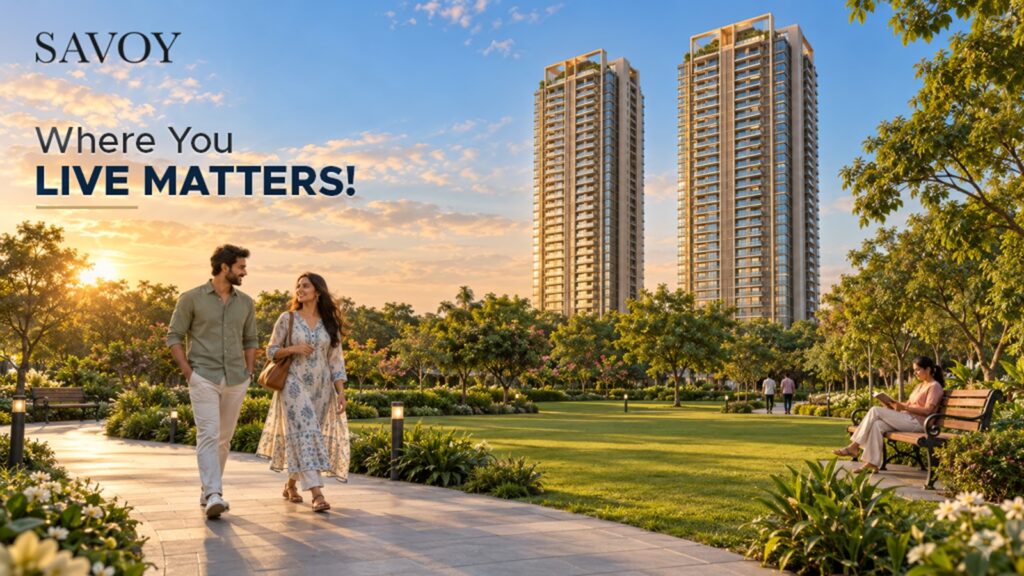
A tall residential tower, an impressive entrance and a long list of amenities can certainly make a property look appealing. But when choosing a home for the long term, the difference between an ordinary apartment and a premium high-rise becomes much more apparent in the details.
It is reflected in how naturally the home receives daylight, how efficiently its spaces are planned, how much privacy residents enjoy and how comfortably the building functions throughout the day. Even seemingly small considerations, such as lift accessibility, balcony placement and the quality of common areas, can influence the overall residential experience.
For homebuyers exploring premium high-rise apartments in Delhi NCR, understanding these distinctions is essential. A premium residence is not simply about having more space or additional facilities. It is about how thoughtfully every element comes together to support everyday living.
At Savoy, this perspective forms the foundation of premium high-rise living. The focus extends beyond the appearance of a residential tower to the planning, comfort and convenience that define the experience of calling it home.
What Makes Apartment Planning Premium?
The difference between an ordinary apartment and a premium residence often begins with the floor plan.
Two apartments may have similar dimensions but offer entirely different living experiences depending on how their spaces are arranged. A thoughtfully planned apartment considers movement between rooms, natural light, ventilation, privacy and the practical requirements of its residents.
For example, a spacious living room may appear impressive on paper, but its usability depends on how it connects with the dining area, balcony and other parts of the home. Similarly, bedrooms should provide a comfortable degree of privacy, while kitchens should support everyday routines without unnecessary movement.
Premium residential planning considers these relationships rather than treating each room as an independent feature.
For modern families, this becomes particularly relevant as homes increasingly accommodate multiple activities, including working from home, family gatherings, personal recreation and everyday relaxation.
A well-planned high-rise apartment should therefore feel comfortable during ordinary weekdays, not just impressive during a property visit.
Usable Space Matters More Than Just Square Footage
When comparing residential properties, buyers often begin with the apartment’s advertised area. However, the actual experience of space depends considerably on its layout and usability.
Understanding the difference between carpet area and super built-up area is an important part of evaluating a property. Carpet area represents the usable floor area within the apartment, while super built-up area includes a proportionate share of common areas, subject to applicable definitions and disclosures.
Beyond these measurements, buyers should also consider how efficiently the available space has been utilised.
Are the bedrooms proportionate to the overall apartment size? Is there sufficient room for storage? Does the dining area feel naturally connected to the kitchen? Is the balcony accessible and practical?
These questions reveal more about everyday comfort than dimensions alone.
At Savoy, premium living is approached through the idea that residential spaces should feel purposeful. The objective is to create an environment where the home supports different aspects of daily life without unnecessary compromises in functionality.
Privacy and Natural Light Define the High-Rise Experience
One of the defining advantages of high-rise living is the opportunity to enjoy elevated views, greater separation from street-level activity and a different relationship with the surrounding city.
However, these advantages depend on thoughtful planning.
Apartment orientation, window placement, balcony positioning and the distance between neighbouring residences can influence the amount of natural light, ventilation and privacy a home receives.
Privacy also extends beyond the apartment itself. Lift lobbies, corridors, common areas and movement within the building contribute to how residents experience their personal space.
A premium high-rise should balance community living with individual comfort, allowing residents to enjoy shared facilities without feeling that their private environment has been compromised.
Natural light and ventilation deserve particular attention during a site visit. Observing the apartment at different times of the day, wherever possible, can help buyers understand how the space performs beyond its presentation.
Premium Apartment Amenities Should Add Everyday Value
Amenities have become an important part of modern residential developments. Swimming pools, fitness centres, clubhouses, landscaped gardens and recreational areas are now familiar features of premium housing.
But the presence of amenities alone does not establish the quality of a residential experience.
Their planning, accessibility, maintenance and practical usability matter just as much.
A fitness centre should support regular use. Children’s play areas should be appropriately planned. Landscaped spaces should offer opportunities for relaxation and outdoor activity. Community facilities should encourage interaction while maintaining a comfortable residential environment.
For families, these shared spaces can make a meaningful difference to everyday routines by offering opportunities for recreation and social interaction within the development.
The larger consideration is whether amenities have been planned around the needs of residents rather than simply included to make a project appear more impressive.
This is an important distinction in premium high-rise living, where the value of a facility is ultimately determined by how well it serves the community.
Construction Quality and Building Services Matter Over Time
The visual appeal of an apartment creates its first impression, but construction quality and building services influence the experience of living there over the years.
Finishes, flooring, doors, windows, plumbing, electrical systems and common-area materials should be evaluated alongside the overall design.
Buyers should also understand the specifications of the project, the materials proposed and the applicable quality standards.
In a high-rise development, building services require particular attention. Lift planning, power backup provisions, water management, fire safety systems and maintenance arrangements contribute to the building’s everyday functionality.
For example, lift accessibility becomes increasingly important during peak hours, while well-maintained common areas influence the comfort of residents and visitors alike.
These considerations may not be as visually prominent as a grand entrance or landscaped podium, but they are central to the long-term residential experience.
A premium apartment should be evaluated not only by how it looks at the time of purchase, but also by how thoughtfully the entire development has been planned to function.
Security and Community Planning Go Hand in Hand
A residential high-rise brings together multiple households within a shared environment. This makes security, controlled access and common-area planning important considerations.
Modern residential developments may incorporate visitor management, surveillance systems, controlled entry points and other security provisions, depending on their design and specifications.
However, effective security is not limited to technology. The movement of residents, visitors and service personnel should also be considered within the overall planning of the building.
Equally important is the balance between shared and private spaces.
A thoughtfully planned residential community allows residents to access common facilities conveniently while maintaining appropriate privacy within their homes.
This balance contributes to a more comfortable living environment for individuals, couples and families across different age groups.
Why Location Remains Central to Premium High-Rise Living in Delhi NCR
A well-designed apartment can offer comfort within its walls, but the surrounding location determines how conveniently residents experience the city.
For buyers considering premium apartments in Delhi NCR, connectivity to workplaces, educational institutions, healthcare facilities, retail destinations and major roads should form an important part of the evaluation.
The relevance of these connections varies according to individual routines. A family with school-going children may prioritise educational institutions and healthcare access, while working professionals may place greater importance on commuting convenience.
Buyers should also consider the established infrastructure around a location alongside proposed developments. Connectivity plans, road improvements and upcoming infrastructure can influence future accessibility, but their status and timelines should be independently verified.
Ultimately, a premium residential address should complement the lifestyle of its residents rather than simply look attractive on a location map.
What Should You Evaluate Before Choosing a Premium High-Rise?
A property visit is an opportunity to look beyond the presentation and understand how the residence is likely to function.
Pay attention to the apartment layout, usable area, natural light, ventilation, balcony positioning and privacy. Review the project specifications, applicable approvals, amenities, security provisions and maintenance arrangements.
It is equally useful to understand the common-area planning, lift access, parking arrangements and the connectivity of the surrounding location.
These considerations help buyers assess a residential development as a complete living environment rather than a collection of individual features.
For a long-term purchase, the most meaningful question is whether the home will continue to support everyday comfort as family requirements and lifestyles evolve.
At Savoy, Premium High-Rise Living Begins With Thoughtful Planning
At Savoy, premium high-rise living is viewed as more than architectural presence or a collection of amenities. It is about bringing together space, planning, privacy, residential convenience and the surrounding environment to create a considered living experience.
Because the true value of a home is experienced in the everyday details. It is reflected in the comfort of a well-planned living space, the ease of daily movement, the opportunity to enjoy shared facilities and the convenience of being connected to the places that matter.
A premium high-rise should offer more than an impressive first impression. It should feel like a home that has been thoughtfully considered for the life that unfolds within it.
That is what distinguishes premium high-rise living from simply living in a taller building.


